
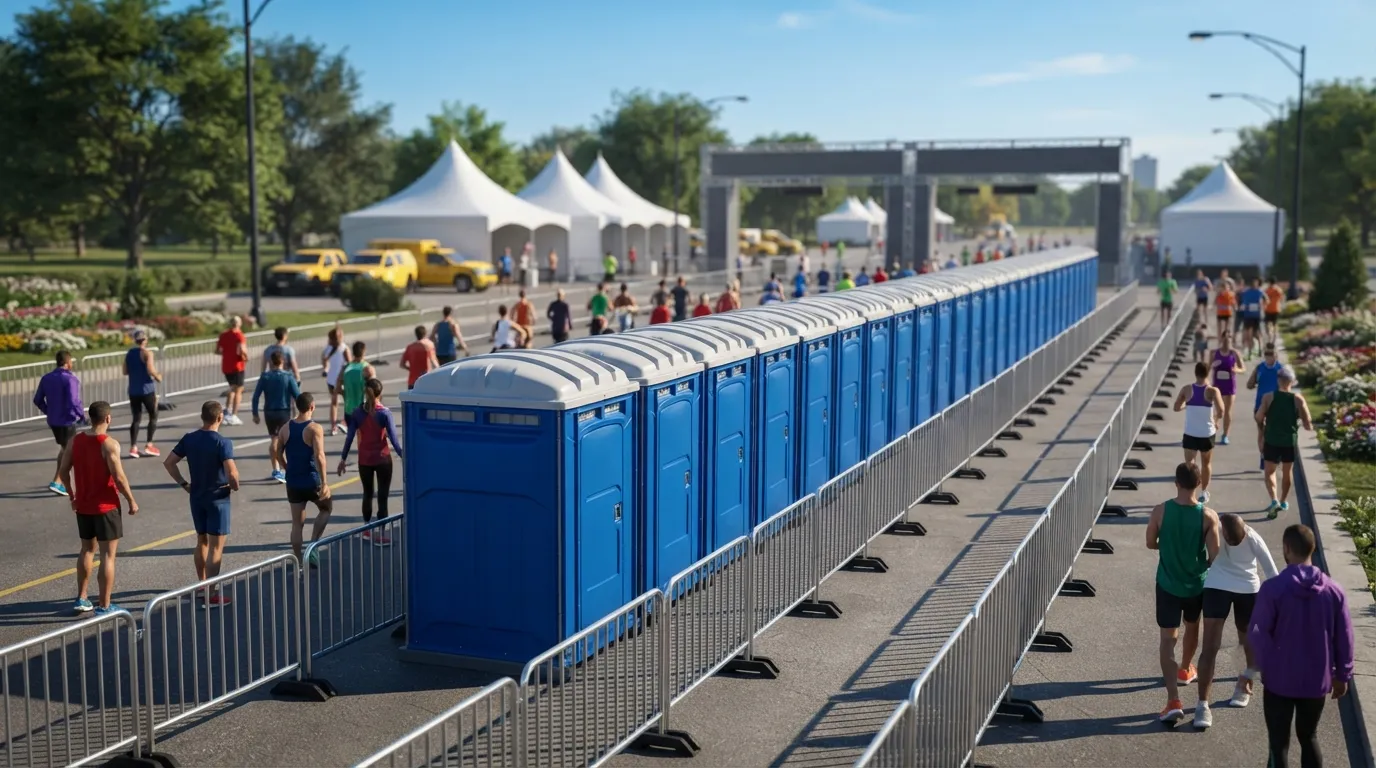
How many portable toilets does a marathon need?
Start with the corral, because that's where 100 percent of your field is standing at once, often for 30 minutes or more before the gun, so check the porta potty placement guide before you finalize the corral layout. Course restrooms at mile markers and aid stations matter too, but the corral is where lines actually cost you a delayed start. How Many Porta Potties Do I Need walks through the math in more detail, but the short version: more units at the start line, fewer spread thin along the course. OSHA 1926.51(c) sets toilet ratios for construction crews, not spectators, but race organizers in Chula Vista use it as a reasonable floor when nothing more specific applies. A standard porta potty rental runs a 60 to 70 gallon holding tank and stands about 92 inches tall, which matters when you're planning sightlines near a finish line stage or sponsor tents. For a half marathon or 10K through Chula Vista neighborhoods, we typically stage clusters at the start, at least one aid station past the halfway point, and a second wave near the finish chute. Races that draw runners from Bonita, 5.7 miles north, or Imperial Beach, 9.7 miles southwest, tend to see bigger fields and need bigger clusters. If your course also needs crowd control at the corral or finish, pair restrooms with a crowd control barrier rental so lines don't spill into the running lane.
What about accessible restrooms for a race?
Every cluster needs at least one accessible unit, and ADA Standards section 213.2 sets that minimum at 5 percent of clustered units, never fewer than one. An ADA accessible porta potty needs a 60 inch turning circle per ADA Standards 304.3.1, a 32 inch clear door opening per section 404.2.3, and a stable, slip-resistant surface underneath per section 302.1. That last point matters most on turf or gravel staging areas, which is common at Chula Vista park starts, and it's worth reviewing the full ADA restroom requirements before you finalize your layout. Placement also has to respect a 36 inch clear route per section 403.5.1, so don't tuck the ADA unit behind a merch tent or a generator. If your event runs power to a timing tent or a sound stage, ask your electrician how to brace a temporary power pole so it doesn't become an obstacle in that same accessible path. A loose or leaning pole near a restroom cluster is a hazard and a liability, and bracing it properly before race morning solves the problem before it starts. Pair your ADA units with a handwashing station rental, since 29 CFR 1910.141(d)(2) requires soap and towels or a hand-drying device, not just sanitizer, at any washing facility you provide.
When should race restrooms be delivered and picked up?
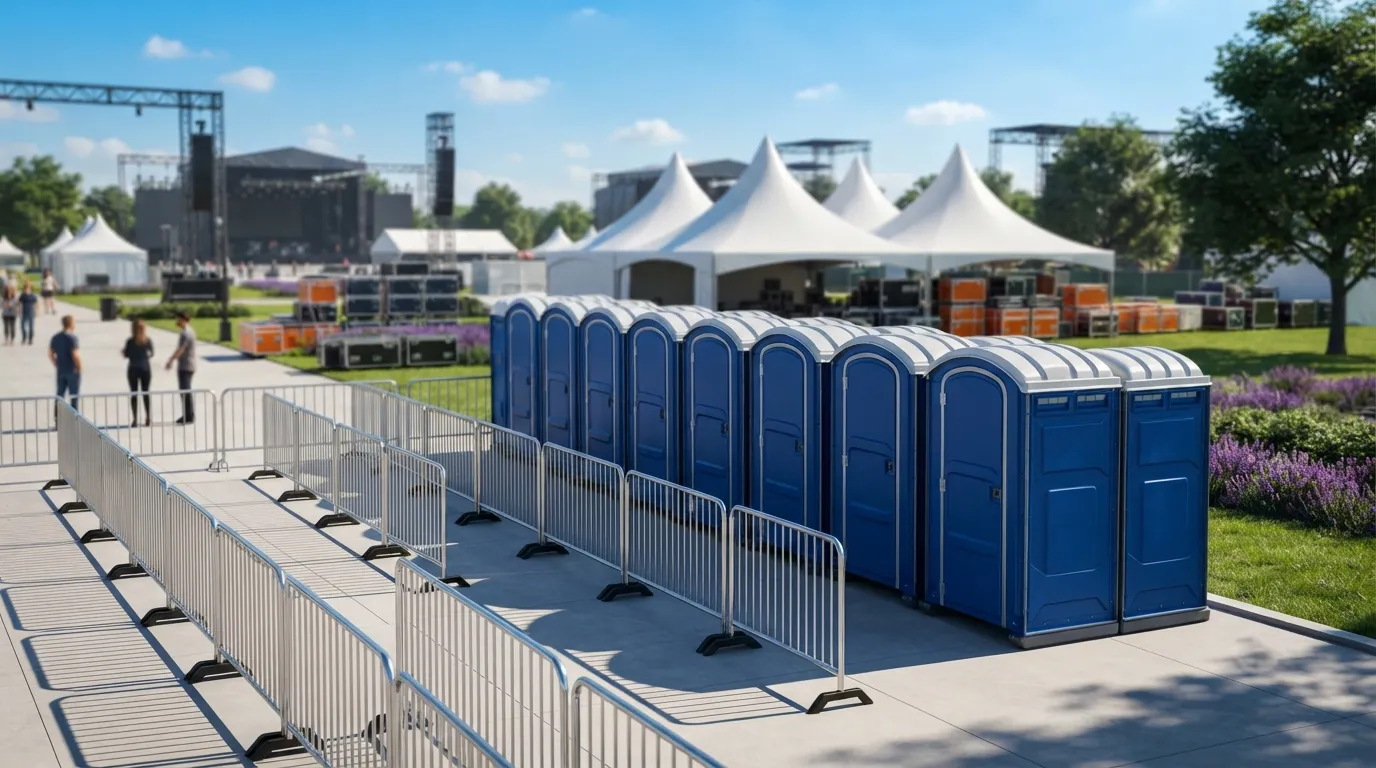
Plan delivery the afternoon before race day so crews have units staged before course marshals arrive at dawn. Pickup usually happens within a few hours of the last runner clearing the course, which your event coordinator confirms during route sweep. A standard unit rents at an event rate between $200 and $800 depending on cluster size and duration, and larger races often add a deluxe flushable porta potty near VIP or sponsor areas for a nicer experience; if you want the full cost breakdown by unit type, Porta Potty Rental Cost covers it. Delivery fees vary by how far the route sits from our staging yard and whether crews need multiple drop points along a point-to-point course rather than a simple loop. Races drawing from farther towns, like Coronado at 15.9 miles west or Casa de Oro-Mount Helix at 16.9 miles north, sometimes justify a second delivery run to split units between start and finish if those points aren't close together. Always confirm placement in the public right of way with the City of Chula Vista before locking your permit, since street closures and sidewalk clearance rules apply beyond what we control on our end; the porta potty permit requirements page has the questions to bring to that call. For big-field events layering restrooms with fencing or barrier, our temporary fence rental page covers what pairs well with race-day logistics.
| unit | duration | low | typical | high |
|---|---|---|---|---|
| standard | event | $200 | $400 | $800 |
| ada | day | $200 | $230 | $400 |
| trailer | event | $2,499 | $3,500 | $3,899 |
How far in advance should I book race restrooms?
Book as soon as your permit is filed, ideally 4 to 6 weeks out for a marathon-scale field, and use the porta potty rental checklist to track what's left. Popular race weekends fill fast, and Chula Vista Porta Pros needs lead time to schedule delivery trucks around other bookings. Late requests are still possible; check Emergency Porta Potty Rental if your date is close.
Do I need separate restrooms for spectators and runners?
Not required, but recommended if your course draws big crowds at the finish line. Spectator clusters near bleachers or a stage reduce congestion for runners crossing the line, and a portable restroom rental mix of standard and ADA units usually covers both groups. See Event Restroom Rental for how organizers typically split zones.
Can I get a restroom trailer instead of standard units?
Yes. A restroom trailer rental works well for finish-line VIP areas or charity race galas. Weekly trailer rates run from $150 to $1,650 depending on stall count, so a 2 stall restroom trailer fits smaller finish tents.
What size dumpster do race organizers usually need?
Depends on field size and vendor count, and a quick look at dumpster rental cost helps you budget before vendors sign on. Many races pair restrooms with a 10 Yard Dumpster Rental for water station cups and banners; check Dumpster Sizes and Dimensions before booking.
Does the course need lighting for an early start?
Pre-dawn corrals often do. A light tower rental covers staging areas before sunrise, and pairing it with restroom clusters keeps the whole start zone visible and safe.
Next step
Get a delivery date
Tell us the address, the dates and the headcount. We size the order and confirm the route.