
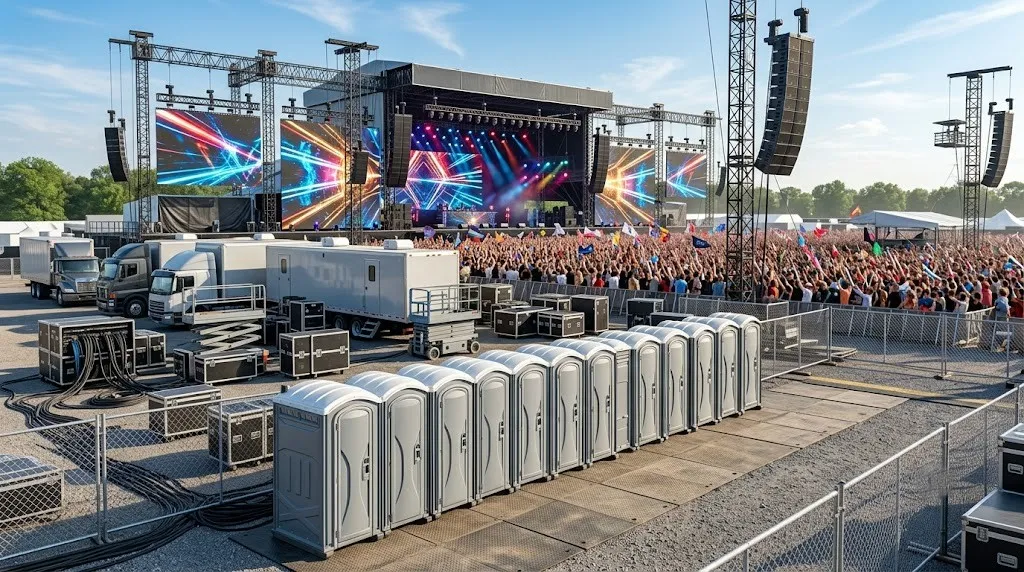
How many restrooms does a concert need in Chula Vista?
Start with the crowd count, then work backward. Standard porta potty rental covers general admission areas, and most promoters split units evenly between the general floor and any VIP or backstage zone. A show with 2,000 people typically needs somewhere between 20 and 27 standard units once you factor in bar lines and set-break surges, plus separate service for staff and vendors. Use the how many porta potties do I need guide to run your own numbers by gate count rather than guessing.
OSHA 1926.51(c) sets the baseline ratio for construction crews at 1 toilet for 20 workers or fewer, and that same logic scales up fast once you're talking thousands of concertgoers instead of a job site crew. It's not a concert code, but it's the standard promoters lean on when nothing else applies. For crews building stage and load-in, count them separately from attendees and check OSHA portable toilet requirements so your production crew isn't sharing a line with the crowd. ADA Standards section 213.2 requires at least 5 percent of any cluster of single-user units to be accessible, never fewer than one, so a 20-unit bank needs at least one ADA accessible porta potty placed on a route that meets the 36 inch clear width in ADA Standards section 403.5.1.
Don't forget water. OSHA 1926.51(a)(1) calls for an adequate supply of potable water at any place of employment, which covers your stage crew and vendors even if the concert itself isn't a construction site. Pair that with a handwashing station rental near food vendors, since soap and towels are required under 29 CFR 1910.141(d)2, not sanitizer alone.
What restroom options work best for a concert crowd?
Standard units handle the floor. For VIP, artist hospitality, or a ticketed premium section, step up to a deluxe flushable porta potty or a full restroom trailer rental. A 2 stall restroom trailer fits a small backstage area, a 4 stall restroom trailer covers a mid-size hospitality tent, and an 8 stall restroom trailer works for larger VIP crowds or a headliner's rider. A luxury restroom trailer is common for artist use when the contract calls for it.
Every unit needs real clearance to get delivered. A standard unit sits about 44 by 48 inches on the ground and stands roughly 92 inches tall, which matters when you're packing units tight along a fence line. If you're bringing in a trailer, plan for about 60 feet of straight clearance behind the delivery truck, same as a roll-off. That clearance requirement is why load-in maps matter more for concerts than for a weekend backyard party. Pair your restroom order with temporary fence rental or crowd control barrier rental to route foot traffic and keep restroom lines from blocking sightlines or emergency lanes. Barricades used for worker or crowd protection should meet ANSI D6.1 under OSHA 1926.202.
Chula Vista concert promoters also lean on event restroom rental packages that bundle standard units, an ADA unit, and a trailer into one delivery, which simplifies both invoicing and load-in logistics compared to ordering each piece separately.
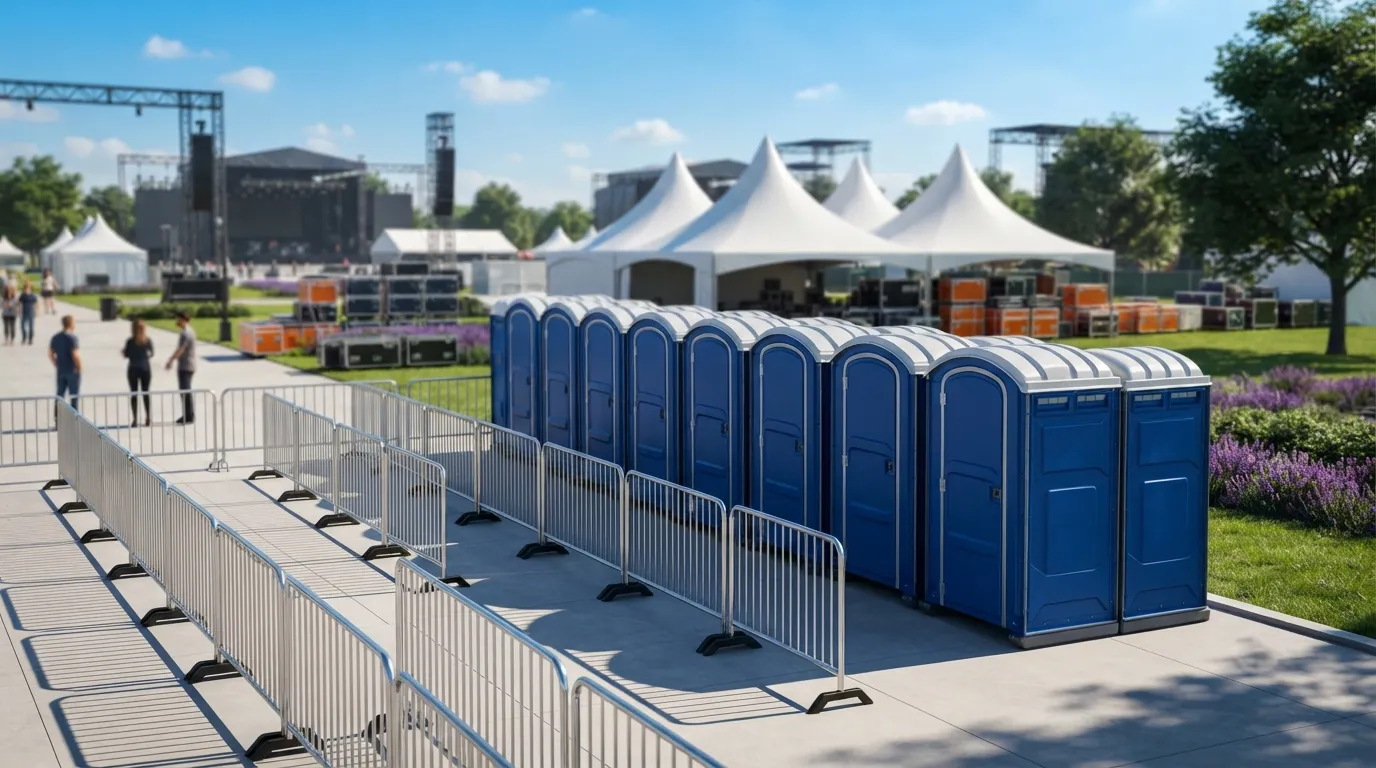
Where should restrooms and handwashing stations go on site?
Place clusters near exits and food areas, never blocking a fire lane or the accessible route required under ADA Standards section 403.5.1. Keep at least one 60 inch turning circle per ADA Standards section 304.3.1 clear in front of any accessible unit, and make sure the door opening meets the 32 inch minimum in ADA Standards section 404.2.3. Surfaces under and leading to the unit need to be stable and slip resistant per ADA Standards section 302.1, which matters on grass fields that get chewed up fast once a crowd moves through.
If your concert runs near food trucks doing any washdown, painting of temporary signage, or pest treatment, OSHA 1926.51(f)(1) requires washing facilities specifically for that paint, coating, or insecticide exposure, separate from general crowd handwashing. A portable sink rental or hand sanitizer station rental handles general crowd needs, but check handwashing requirements before assuming sanitizer alone covers your vendors.
For placement logistics specific to festival grounds, the porta potty placement guide covers slope, ground protection, and service truck access in more depth than a single concert page can. Multi-day festivals should also see festival restroom rental for turnaround planning between show days.
| unit | duration | typical price |
|---|---|---|
| standard | event | $400 |
| deluxe | day | $300 |
| ada | day | $230 |
| trailer | event | $3,500 |
Prices above reflect the FACT BANK's measured event and day rates; ask for a written quote once your crowd count and site map are set. See porta potty rental cost for how daily and weekly rates compare if your show runs multiple nights.
How far in advance should I book concert restrooms?
Book as soon as you have a confirmed attendance estimate, ideally weeks out. Concert-scale orders (20-plus units, trailers, fencing) take longer to stage and deliver than a single backyard unit, and popular event weekends fill delivery slots fast across Chula Vista and nearby Bonita, 5.7 miles north.
Do I need an ADA unit even for a small concert?
Yes. ADA Standards section 213.2 requires at least one accessible unit per cluster of single-user toilets, regardless of total crowd size. Skipping it isn't just a compliance gap, it turns away paying attendees who need that access.
Can Chula Vista Porta Pros deliver restroom trailers to outdoor venues?
Yes, provided there's roughly 60 feet of straight clearance for the delivery truck and firm, level ground for setup. Grass fields and gravel lots both work if graded properly; confirm ground conditions when you request a quote.
What happens if the concert runs long or adds a second night?
Service intervals can be adjusted. ANSI/PSAI Z4.3 sets a baseline of one service visit per week for lighter use, but concert-scale crowds need mid-event servicing, especially for multi-day festivals. Flag your schedule when booking.
Do I need separate restrooms for staff and crew?
Yes. OSHA's ratio under 1926.51(c) applies to your production and vendor crews as workers, separate from attendee counts. Keep at least one dedicated cluster backstage so crew isn't competing with concertgoers during set breaks.
Next step
Get a delivery date
Tell us the address, the dates and the headcount. We size the order and confirm the route.